 P. Sze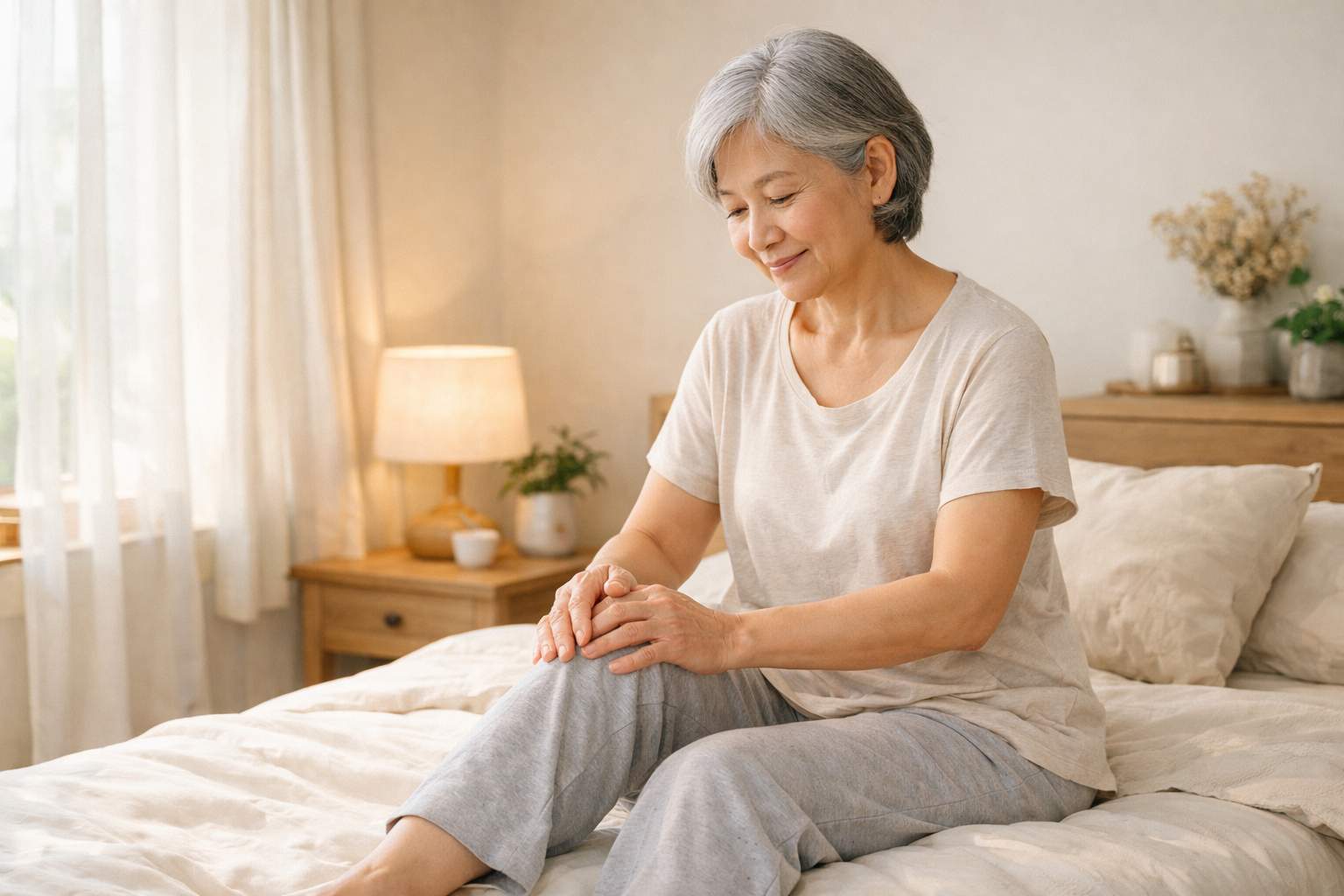
Gentle Alternatives to Medication: A Morning Routine to Ease Stiff Joints and Start the Day Pain-Free
Waking up with stiff knees, tight hips, or a heavy, achy lower back is a daily reality for many older adults. Those first few minutes in the morning can feel especially challenging, as if your body needs time and patience before it is ready to move. If this sounds familiar, you are not alone—and from a Traditional Chinese Medicine (TCM) perspective, there is a clear and gentle explanation for why this happens.
Rather than forcing yourself to “push through” the stiffness, TCM encourages working with the body. With simple acupressure, slow movement, and warming habits, you can help your joints feel more comfortable and supported before you even get out of bed.
Why Morning Stiffness Is So Common in Seniors
In TCM, free and smooth movement depends on the healthy circulation of Qi (vital energy) and Blood. During sleep, the body stays in the same posture for many hours. This prolonged stillness—especially when combined with cooler nighttime temperatures—can slow circulation.
Ms. Mai, a TCM therapist from Japan, explains that aging adds another important layer. As we get older, Kidney function naturally declines. In TCM, the Kidneys help govern the bones and joints and support fluid balance. When this system weakens, fluids may not be eliminated efficiently and can accumulate, further contributing to stagnation of Qi and Blood. The result is stiffness, heaviness, and difficulty moving upon waking.
As Ms. Mai summarizes:
“According to the TCM principle ‘where there is obstruction, there is pain,’ morning joint stiffness reflects impaired circulation of Qi and Blood. Restoring their smooth flow throughout the body is the key to relief.”
A Gentle Acupressure Routine Before Getting Out of Bed
One of the best times to address morning stiffness is before standing up. Your muscles are relaxed, and there is no pressure to rush. The following acupressure points are simple to use and focus on the areas most affected in the morning.
Knee Points to Reduce Stiffness
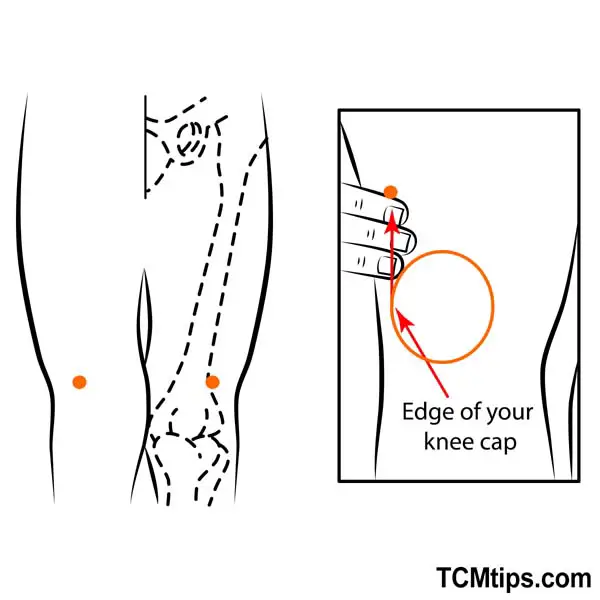
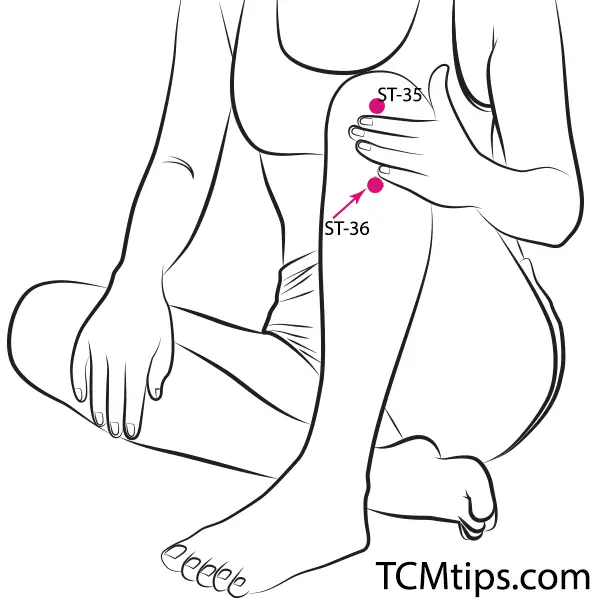
For the knees, Ms. Mai recommends two key areas: Liangqiu (ST34) and Dubi (ST35).
To apply these, place your palms directly over your kneecaps. Using gentle, comfortable pressure, rock your hands in small circular motions. You are not pressing hard; the goal is to encourage warmth and circulation around the joint. Continue for about one minute, breathing slowly and evenly.
This simple action helps nourish the knee joints, which often feel tight or unstable after a night of rest.
Hip Points to Loosen Tightness
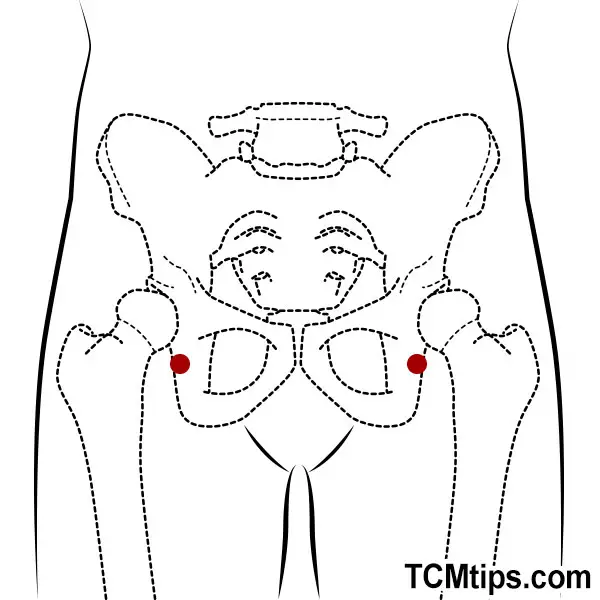
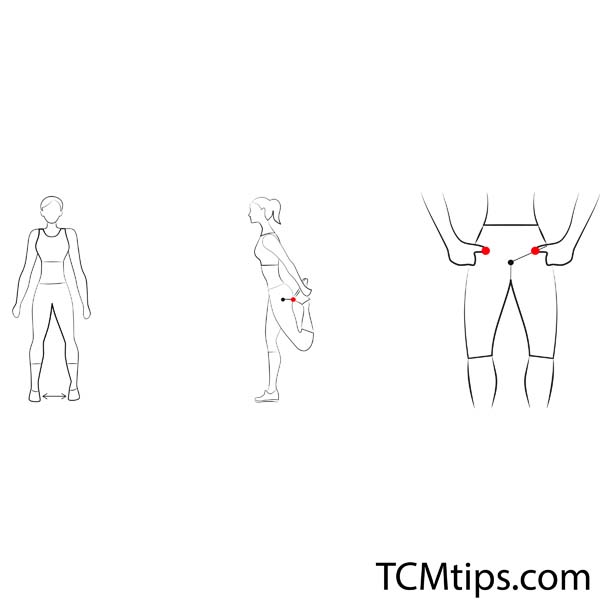
For the hips, focus on Chongmen (SP12) and Huantiao (GB30).
While lying on your back, gently massage the hip area using your palms or softly closed fists. Move slowly and stay within a pain-free range. The hips play a major role in balance and walking, and releasing stagnation here can make standing and taking your first steps feel much easier.
Spend about one minute on each side, keeping your breath relaxed.
Lower Back Points for Support and Comfort
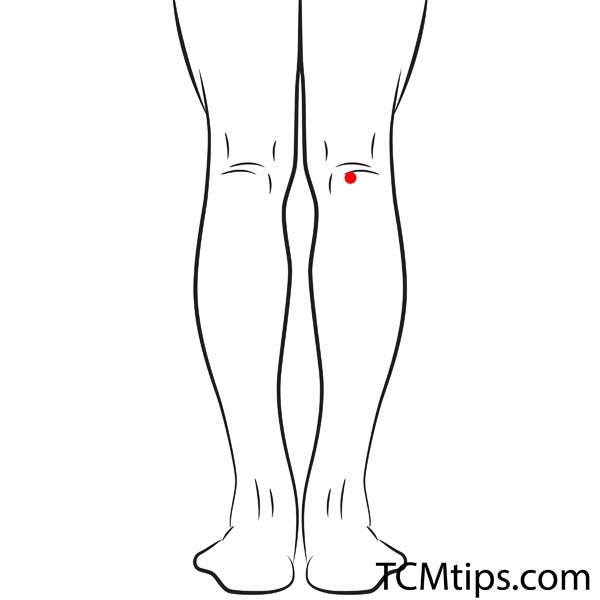
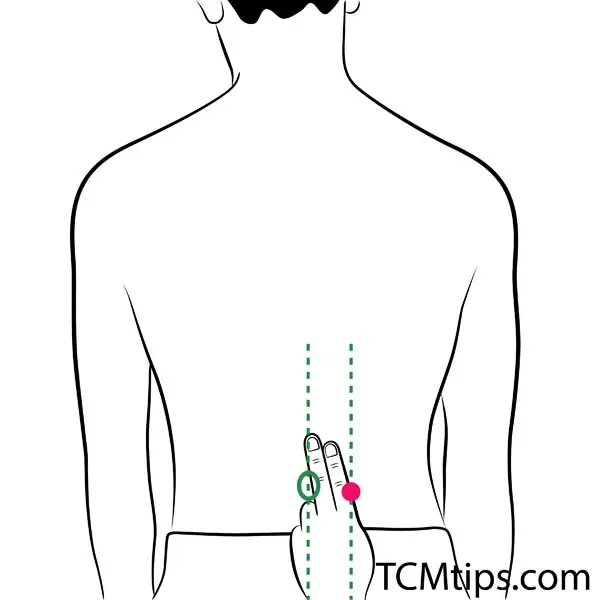
Morning stiffness often settles into the lower back. To address this area, Ms. Mai highlights Weizhong (BL40) and Shenshu (BL23).
A gentle way to stimulate these points is through movement rather than direct pressure. While lying on your back, bend both knees and slowly let them fall from side to side. This creates a mild stretch through the lower back and helps ease tension that built up overnight. Move slowly and stop if anything feels uncomfortable.
Using Breath and Movement to “Wake Up” Circulation
Acupressure works best when combined with gentle movement and breathing. After stimulating the points above, take a few minutes to slowly bend and extend each joint—ankles, knees, hips, shoulders—while breathing deeply.
Inhale calmly as you prepare the movement, and exhale as you gently flex or extend. Repeat this about five times for each joint. This rhythm helps circulation return gradually and is especially helpful for seniors who struggle with balance or feel unsteady first thing in the morning.
Ms. Mai emphasizes that simplicity is key:
“Move with your breath, and for each joint, repeat the breathing and gentle flexion and extension about five times.”
How Sleep, Digestion, and Pain Are Connected
Many older adults notice that morning stiffness feels worse when sleep is poor or digestion feels sluggish. In TCM, these issues are closely linked. Poor sleep can worsen Qi stagnation, while digestive weakness reflects reduced function of the Stomach and Spleen—systems essential for producing and moving energy.
Because all of these issues relate to circulation of Qi and Blood, daily supportive habits matter. Gentle exercise, light stretching, deep breathing in the morning and evening, and keeping the body warm can gradually reduce stiffness over time.
Warming Morning Foods to Ease Stiffness
If your stiffness is worse in cold or damp weather, or if you often feel chilled, warming foods can be especially helpful. TCM favors simple, warm breakfasts that support circulation.
Soups made with root vegetables such as daikon radish, carrots, and lotus root are excellent choices. Adding warming ingredients like ginger, green onions, and garlic enhances their effect. Fermented foods are also valued, making miso soup a gentle and nourishing option. A hearty pork and vegetable miso soup with added ginger is particularly effective for warming the body and supporting circulation.
One Simple Habit Many Seniors Overlook
One practical tip Ms. Mai wishes more older adults knew is the importance of staying warm, especially overnight. Exposure to cold during sleep can worsen stagnation and lead to more stiffness in the morning.
Wearing soft knee supports, leg warmers, or an abdominal warmer can help maintain warmth without restricting movement. Choosing non-restrictive options that are comfortable enough to wear during sleep can make a noticeable difference in how your body feels when you wake up.
A Kinder Way to Start the Day
Morning stiffness does not have to control how your day begins. By using gentle acupressure on the knees, hips, and lower back, adding slow movement with relaxed breathing, and supporting your body with warmth and nourishing foods, you give yourself a calmer, more comfortable start.
These practices reflect the heart of TCM—supporting the body gently and consistently. Over time, they can help you feel more limber, grounded, and confident as you move through the day.
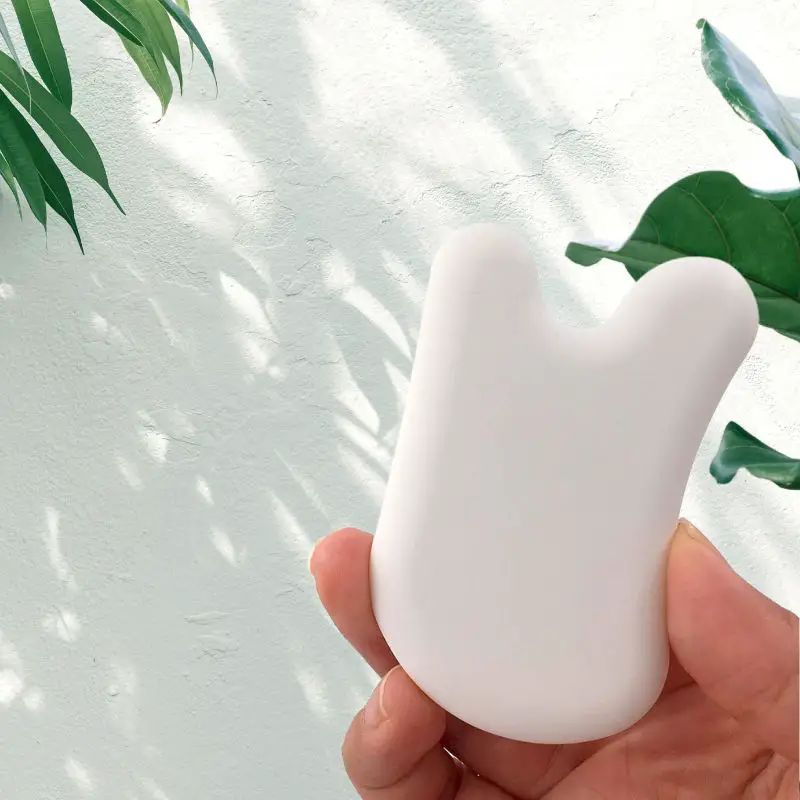
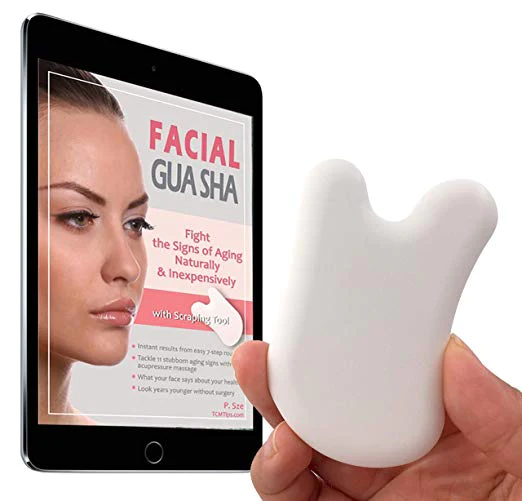
Try our Anti-Aging Gua Sha Tool designed to bring out your skin’s natural glow.
Best Gua Sha Product- Anti-Aging: The tool is designed to target 11 specific aging signs such as wrinkles and sagging skin. By following the 7-step routine, users can improve skin firmness and reduce fine lines naturally.
- Enhances Skincare Routine: It works effectively with serums and lotions, boosting absorption and efficacy of skincare products.
- Visible Skin Improvement: Users can expect a smoother complexion, reduced puffiness, and a more youthful appearance.