 P. Sze
Keep Your Hips Flexible and Stay Active: Natural TCM Strategies for Pain-Free Movement
Ever notice how your hips feel tighter after a long hike, a full day in the garden, or even hours of standing at a community event? You finish strong, but later that evening—or the next morning—you feel stiff, restricted, and slower than you’d like.
For active adults who want to keep moving well into their 50s, 60s, and beyond, hip flexibility isn’t just about comfort. It’s about independence. Smooth, mobile hips support walking, balance, posture, and confident movement in everything from biking to travel.
Traditional Chinese Medicine (TCM) offers a practical, prevention-focused way to care for your hips before stiffness turns into chronic discomfort. Instead of chasing pain after it appears, TCM looks at how daily habits, circulation, and age-related changes influence mobility over time.
Why Hips Get Tight After Activity, According to TCM
In TCM, movement depends on the smooth flow of Qi (energy) and Blood through pathways called meridians. Two of the most important meridians for hip mobility are the Gallbladder and Kidney meridians, both of which pass directly through the hip region.
The Gallbladder meridian is closely connected to muscles and connective tissue. When it becomes stagnant—often from repetitive activity, prolonged sitting, or overuse—you may notice stiffness, soreness, or a limited range of motion. The Kidney meridian, on the other hand, is deeply tied to lower-body strength and aging. As Kidney energy naturally declines with age, the hips can lose warmth, resilience, and flexibility.
Ms. Mai, our TCM therapist, explains it simply:
“Both meridians pass through the hip area, but the Kidney meridian is especially related to lower-body strength. The Gallbladder meridian helps maintain mental and physical balance and is closely connected to the muscles, so it can also be involved in muscle stiffness or soreness.”
The takeaway is empowering: hip stiffness is not a personal failure or an inevitable part of aging. It’s often a sign that circulation needs support.
Simple Daily Hip-Opening Movements to Stay Mobile
You don’t need intense stretching routines or complicated workouts to support hip health. TCM favors gentle, consistent movements that keep pathways open without strain.
Seated Soles-Together Stretch
Sit upright and bring the soles of your feet together, letting your knees fall gently outward. Keep your spine tall and your shoulders relaxed. This position encourages the hips to open naturally while supporting the Gallbladder and Kidney meridians.
As you hold the stretch, focus on slow, diaphragmatic breathing. Let each exhale soften tension around the hips rather than forcing flexibility.
Kneeling Hip Lunge
Place one knee on the floor and bend the other leg in front of you at a 90-degree angle. Keep your back-knee side stable and gently shift your weight forward onto the front leg. You should feel a stretch along the hip of the back leg—not sharp or intense, just warm and opening.
Done daily, these movements help prevent stiffness from accumulating after hiking, gardening, or long periods of sitting.
Acupressure Points That Support Hip Freedom
Acupressure is a powerful self-care tool for active adults because it’s simple, portable, and gentle. Two key points around the hip can help encourage circulation and reduce stagnation.
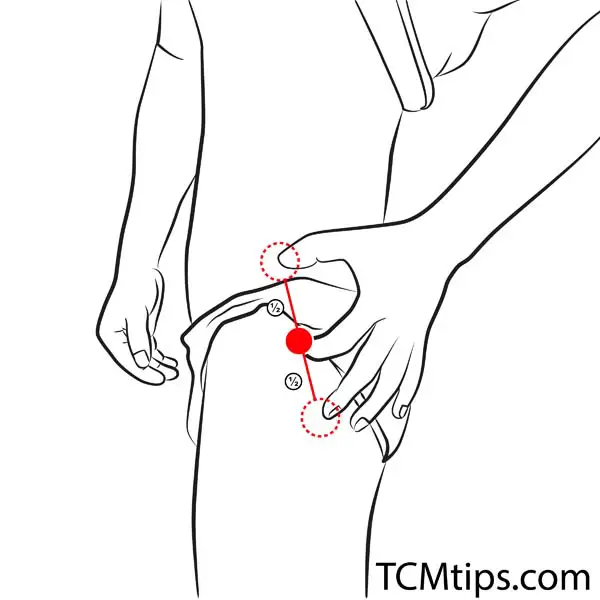
GB-29 (Juliao)
To find this point, place your palm on the outer side of your hip while standing. Lift that leg slightly—the bone that moves under your hand is the greater trochanter. GB-29 is located between this bone and the front hip bone. Because balance can be tricky, hold onto a wall or chair while locating the point.
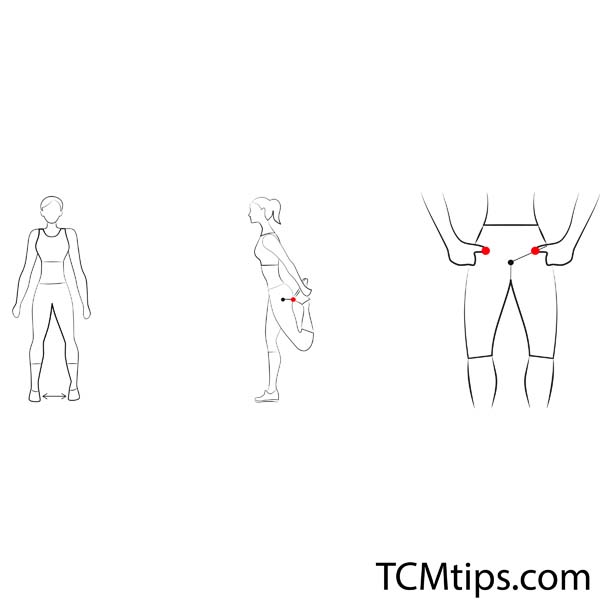
GB-30 (Huantiao)
This point sits in the hollow that appears when you contract your gluteal muscles. It’s often tender in people who feel tight or sore after activity.
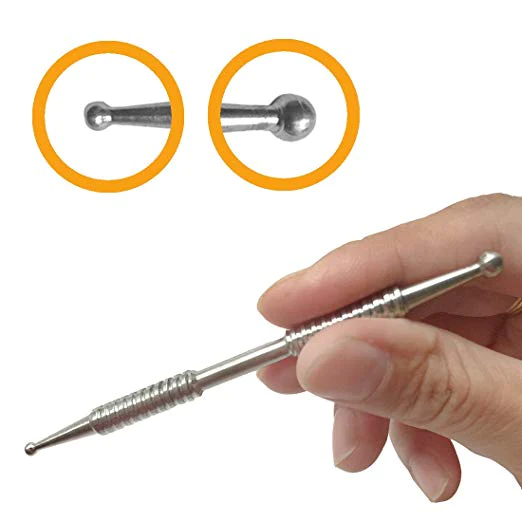
Use your thumb, knuckle, or middle finger to apply steady, comfortable pressure. A helpful technique is to slightly side-bend your torso toward the pressing hand, allowing pressure without force. Mild tenderness is normal; sharp pain is not.
Warming Rituals That “Unstick” the Hips
Many active adults spend hours sitting, squatting, or standing in one position. Over time, this can leave the hips feeling cold, tight, and unresponsive. TCM recommends warming before pressing.
Instead of aggressive massage, gently rub the hip area with your palm or place your knuckles lightly on the area and make small circular movements. The goal is warmth and movement, not deep pressure.
Pairing this with slow breathing—especially during the seated soles-together stretch—helps the hips relax gradually. This kind of ritual works especially well in the evening after a long day outdoors or first thing in the morning before activity.
Foods That Nourish the Joints and Support Long-Term Mobility
In TCM, what you eat influences how well your joints age. The Kidneys, in particular, benefit from nourishing, warming foods.
Foods such as black sesame seeds, wood ear mushrooms, oysters, chicken, and eel are traditionally used to support Kidney strength. For joint comfort, improving circulation of Qi and Blood is key. Simple ingredients like ginger and jujube can be enjoyed in soups or teas to gently warm the body.
Warm citrus-based herbal teas are another easy way to promote circulation without overstimulation—ideal for people managing blood pressure or energy dips.
Prevention: The TCM Advantage for Active Aging
Many adults wait until pain appears before changing their routine. TCM takes a different approach.
“Prevention begins by nourishing the Kidneys and keeping the body’s pathways flowing before imbalance takes root.”
From a TCM perspective, age-related hip stiffness often reflects weakened Kidney function and reduced meridian flow. Prevention means supporting these systems daily—through food, movement, breath, and acupressure—long before stiffness becomes limiting.
A Gentle Routine You Can Start Today
If you already feel occasional pinching or soreness, start small:
- Warm the hips with gentle rubbing for one to two minutes
- Practice one hip-opening stretch with slow breathing
- Apply light acupressure to GB-29 and GB-30
- Repeat once or twice daily, especially after activity or before bed
These simple steps encourage circulation, reduce stagnation, and help your hips recover faster—so you can keep doing what you love with confidence.
Staying active doesn’t require pushing harder. It requires listening earlier. When you support your hips consistently, you protect your mobility, independence, and enjoyment of movement for years to come.
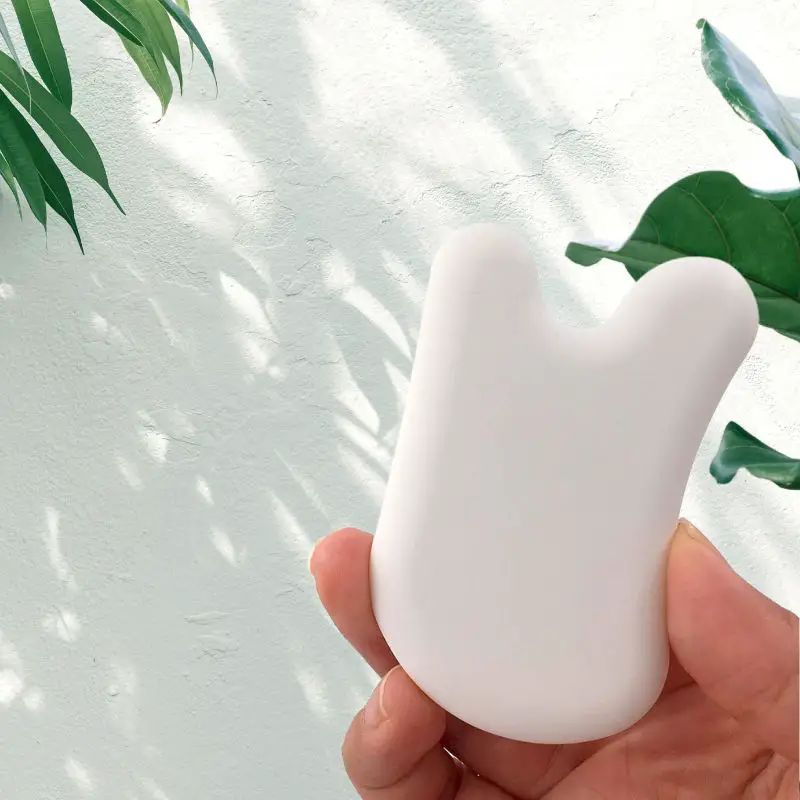
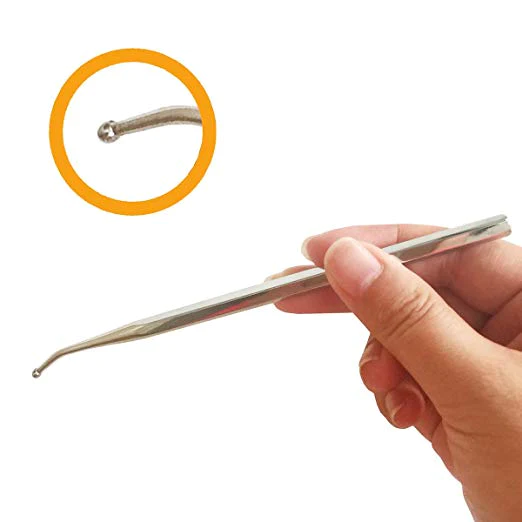
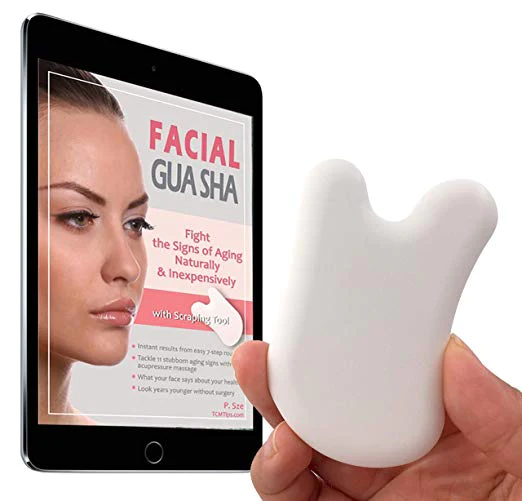
Try our Anti-Aging Gua Sha Tool designed to bring out your skin’s natural glow.
Best Gua Sha Product- Anti-Aging: The tool is designed to target 11 specific aging signs such as wrinkles and sagging skin. By following the 7-step routine, users can improve skin firmness and reduce fine lines naturally.
- Enhances Skincare Routine: It works effectively with serums and lotions, boosting absorption and efficacy of skincare products.
- Visible Skin Improvement: Users can expect a smoother complexion, reduced puffiness, and a more youthful appearance.